Companies from Unilever to Proctor & Gamble, Nestl, Coca-Cola and PepsiCo have all alluded to lockdown challenges in India and the globe as well as the impact it will have on April-June as well as full-year numbers.

Deflation masked the rise in food inflation to a 5-month high.

'We plan to touch Rs 1 trillion of Amul brand's turnover in the next five years.'
With all the brouhaha over GST, and (often) a limited understanding of the long-term forces shaping India's logistics sector, companies seem to have omitted factoring in some underlying trends that could shape supply chain excellence, says Neelesh Mundra.

'Whoever owns the best chip industry will be the Saudi Arabia of the era of data,' predicts Rajeev Srinivasan.
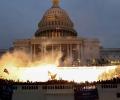
Images that capture what it was like living through 2021.

The World Bank on Sunday said the coronavirus outbreak has severely disrupted the Indian economy, magnifying the pre-existing risks to its outlook. In its 'South Asia Economic Update: Impact of Covid-19', the World Bank estimated the Indian economy to decelerate to 5 per cent in 2020 and projected a sharp growth deceleration in fiscal 2021 to 2.8 per cent in a baseline scenario.

After years of disappointing growth, the economy and the markets are poised for a breakout, notes Akash Prakash.
Companies in the small-cap universe are having a dream run - the Nifty Smallcap 100 index has shot up more than 25 per cent on a year-to-date basis, even as the benchmark Nifty is up 7 per cent. This is the best start for the index since 2017 when the Nifty Smallcap 100 index surged 32.3 per cent between January 1 and May 10. However, in terms of outperformance to the Nifty, this year's performance is the best in more than a decade. A combination of sectoral tailwinds and lack of institutional selling pressure has helped small companies escape from the correction triggered by the second wave of Covid-19.

Indian indices have hit all-time highs in the New Year and the sentiment remains strong. All valuations are also at extremely high levels, cautions Devangshu Datta

The agreement on pricing last month marks a significant step towards promoting energy security in the region, say Nisha Taneja & Samridhi Bimal.
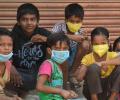
As the coronavirus outbreak enters its fifth month, the UN Children's Fund (UNICEF) requested $1.6 billion to support its humanitarian response for children impacted by the pandemic. The health crisis is 'quickly becoming a child rights crisis. And without urgent action, a further 6,000 under-fives could die each day', it said.
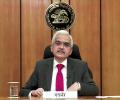
'There are some high-frequency indicators where uptick is visible and some where it is not'

The steep decline in commodity prices has reversed.
It said an estimated 42-66 million children could fall into extreme poverty as a result of the crisis this year, adding to the estimated 386 million children already in extreme poverty in 2019.
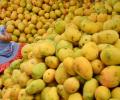
Export of mango, especially alphonso, to European countries has been negligible this season; shipments to the Gulf fell 40-50 per cent.

Six months after Nepal was devastated by a massive earthquake, relief efforts are literally running out of steam as weeks of protests against a new constitution have led to a critical shortage of fuel. Naomi Mihara reports on how NGOs are racing against time to reach aid to the people before winter sets in.

'With the June quarter GDP shrinking by nearly a quarter, there is an even greater economic imperative: Reduction of uncertainty,' observes Neelkanth Mishra.

Unseasonal rains and hailstorm are likely to disrupt supplies.

Observing that the economic recovery was not yet fully entrenched, the RBI Governor said recovery is likely to be gradual.

'People are already sending congratulatory messages. But I have said, "Please don't until the trials are over".'

Non-resident Indians (NRIs) are very positive about India

There is a need for stimulus, as India is essentially a consumption economy, argues Cargill India chairman Siraj Chaudhry
'There is a need for stimulus, as India is essentially a consumption economy.'

he government is examining a plan of bank recapitalisation and considering an urban version of MNREGS.

We have our own problems for sure and they are not trivial, but for now, our economy is in not too bad a shape, our politics is as personality-driven and authoritarian as that of most countries in the world. We must make the best of what we have and not be excessively unhappy looking at the grass on the other side of the septic tank which may not be greener after all!, observes Shreekant Sambrani.

'And they are going to be milder because we are dealing with the vaccinated and are much richer in terms of the immune response in the population.'
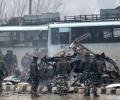
'As far as Kashmir is concerned, a 'solution' was very much in play, and had brought endemic violence across the Jammu and Kashmir regions very much under control before the disruptive adventurism of the present regime resulted in a limited and localised escalation.'

Markets are assuming that by the second half of 2021, the world will be approaching some type of normalcy, points out Akash Prakash.
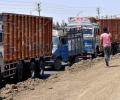
With the government asking the companies to operate with only 50 per cent staff strength, and exports dipping to almost zero, the truck and bus drivers idling at the petrol pump say they hardly have any work now. At a petrol pump on the deserted Bavla-Changodar highway near Ahmedabad in Gujarat, several trucks and buses are neatly parked in a row.

'One of the biggest issues the Indian economy faces right now is of job creation...' 'The nexus between growth and employment has to be closed...' 'In the absence of a manufacturing expansion, the alternative is to have the service sector as the driver of both GDP as well as employment growth.'

However, the number of confirmed cases reported by states rose by over 500 to cross 3,000 with at least 90 dead. While Maharashtra, Telangana and Delhi disclosed several new cases of the deadly virus infection, government officials said the numbers have risen in last few days mostly due to one event -- referring to the Tablighi Jamaat's religious gathering in the national capital attended by thousands of people last month.

From India's fight against COVID-19 to China face-off, Kovind spoke on several issues during the televised address.

Making it easier to do business is a key element of our strategy, says Foreign Secretary S Jaishankar.
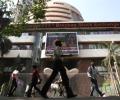
BSE Mid-cap and BSE Small-cap lost 2.5% and 3.1% after oil prices soared

Automobile companies are worried about challenges from electric mobility, automation and connected vehicles.
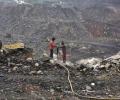
Labour unions, with a history of hostility towards management, are pushing back on Coal India's plans, fearing modernization and outsourcing will hit jobs.

In remarks titled 'Implement Consensus and Handle Differences Properly to Bring China-India Relations Back on the Right Track' posted on the Chinese embassy website, Sun spoke of disruptions in the bilateral relationship and outlined five steps to clarify 'some fundamental points'.

Metal stocks fell on Tuesday, with the S&P BSE metal index sliding 2.8 per cent compared to the 0.64 per cent fall in the benchmark S&P BSE Sensex

The BSE Sensex moved up 103 points to 35,319.35, while the wider NSE Nifty finished at 10,741.70, up 23.90 points.
